
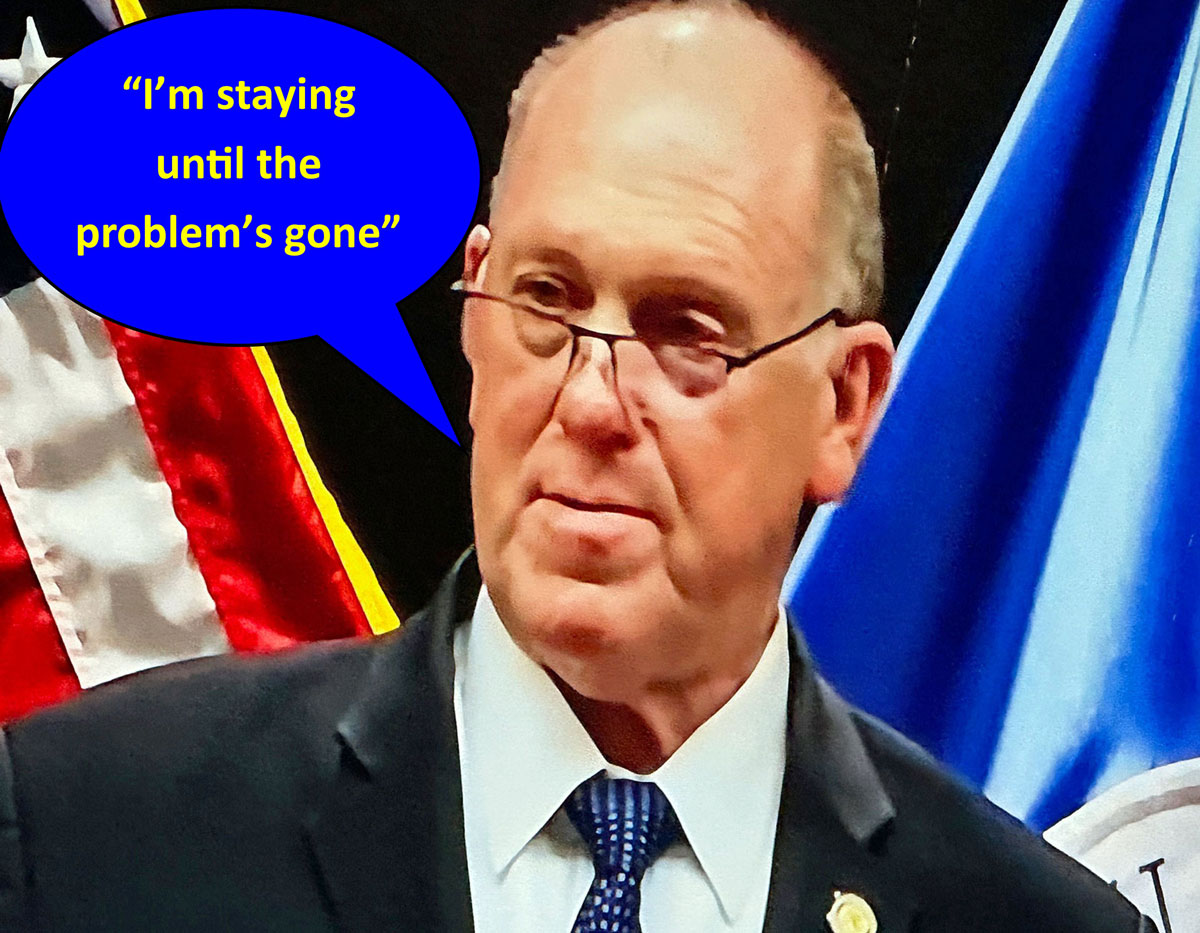
The Immigration Enforcement Challenge in Minnesota: The Problem Tom Homan Will Fix!
Introduction: Contextualizing the Crisis
The deployment of White House Border Czar Tom Homan to Minnesota in January 2026 underscores the federal government’s commitment to upholding immigration laws and ensuring public safety amid escalating challenges in sanctuary jurisdictions. From the vantage point of U.S. immigration policy, as articulated under President Donald Trump’s administration, the core “problem” in Minnesota is multifaceted: it encompasses unchecked illegal immigration, non-cooperation from state and local authorities, and the resultant threats to community security and national sovereignty. This summary outlines the key dimensions of this issue, drawing on the rationale behind Operation Metro Surge and the need for decisive federal intervention. The government’s approach prioritizes targeted enforcement against public safety and national security threats, while seeking collaborative solutions to de-escalate tensions without compromising border integrity.
Minnesota, particularly the Twin Cities area of Minneapolis-St. Paul, has emerged as a focal point for these concerns due to its status as a hub for immigrant communities and its adoption of sanctuary policies. These policies, which limit cooperation with federal immigration authorities, are viewed by the administration as direct impediments to effective law enforcement. As Homan stated upon his arrival, the goal is to “fix” the situation by fostering “common sense cooperation” that allows for a strategic draw-down of federal resources once compliance is achieved. The problem is not immigration itself; legal immigration is celebrated as a cornerstone of American society. Systemic failures under the inept Biden administration allowed unprecedented illegal entries, straining resources, and endangering residents.
The Root Issue: Illegal Immigration and Its Societal Impacts
At the heart of the problem lies the persistent influx of undocumented individuals into Minnesota, facilitated by porous national borders and internal policies that shield violators from accountability. U.S. government policy emphasizes that illegal immigration undermines the rule of law, overburdening social services, healthcare, education, and housing systems. In Minnesota, this has manifested in several ways. For instance, the state has seen a significant rise in migrant populations from regions like Central America, Africa, and the Middle East, often arriving via overland routes or through asylum claims that the administration argues are frequently abused. Among them are people whose previous cultural experience condones theft, fraud, bribery of public officials, and violent crime.
Data from Immigration and Customs Enforcement (ICE) indicates that Minnesota harbors thousands of individuals with outstanding deportation orders, many of whom have criminal records ranging from minor offenses to serious felonies such as drug trafficking, assault, and gang-related activities. The government’s perspective holds that these individuals pose “public safety threats,” as Homan has repeatedly emphasized. Without robust enforcement, communities suffer: local jails release suspects before ICE can intervene, allowing them to re-offend. This cycle is exacerbated in sanctuary cities like Minneapolis, where policies prohibit local law enforcement from honoring ICE detainers—requests to hold suspects for deportation proceedings.
Economically, the strain is palpable. Illegal immigrants often compete for low-wage jobs, depressing wages for American workers and legal residents. Minnesota’s welfare system, generous by national standards, becomes overburdened, diverting funds from citizens in need. Healthcare facilities in the Twin Cities report increased uncompensated care for undocumented patients, contributing to longer wait times and higher costs for everyone. Educationally, schools grapple with language barriers and overcrowded classrooms, diluting resources for native-born students. From the federal viewpoint, these issues are not xenophobic fabrications but empirical realities that erode the social fabric and fiscal stability of the state.
Moreover, national security concerns amplify the problem. Minnesota’s Somali-American community, one of the largest in the U.S., has been linked in federal reports to isolated instances of radicalization and terrorism recruitment. While the vast majority are law-abiding, the administration argues that lax immigration controls allow potential threats to slip through, as seen in past cases involving individuals who entered illegally or overstayed visas. The government’s policy of prioritizing deportations for those with criminal histories or ties to extremism is designed to mitigate these risks, ensuring that America remains a safe haven for those who follow the rules.
Sanctuary Policies: Obstructing Federal Authority and Endangering Communities
A critical aggravating factor is Minnesota’s embrace of sanctuary status at both state and local levels. Governor Tim Walz and Minneapolis Mayor Jacob Frey have championed policies that restrict information-sharing with ICE, viewing them as protections for immigrant communities against overreach. However, from the U.S. government’s standpoint, these measures are counterproductive and dangerous. They create “safe havens” for criminals, allowing deported individuals to return and evade capture. Homan has highlighted this in meetings with state officials, noting that access to local jails would enable more precise, less disruptive enforcement—targeting threats without broad street sweeps.
The administration contends that sanctuary policies endanger residents by prioritizing political ideology over safety. For example, in cases where undocumented individuals commit crimes, local authorities’ refusal to cooperate means delayed deportations, increasing recidivism risks. BBC Verify and other analyses cited by Homan affirm that sanctuary cities can “endanger the residents of the community” by shielding offenders. This non-cooperation has forced the federal government to escalate operations, deploying additional agents under Operation Metro Surge, which began nearly two months prior to Homan’s arrival. The surge aims to apprehend high-priority targets, but resistance has led to confrontations, underscoring the need for Homan’s oversight to make operations “safer, more efficient, by the book.”
Tragically, this resistance has contributed to recent incidents, including the fatal shootings of two U.S. citizens, Renee Good and Alex Pretti, during enforcement actions. While these events have sparked outrage and protests, the government correctly frames them as regrettable outcomes of chaotic environments created by protesters and non-compliant locals. Naive protesters, relying on simplistic narratives promulgated by powerful political forces, insert themselves into dangerous situations for which they have no previous experience. For instance, Pretti, a concealed carry permit holder, SHOULD HAVE KNOWN that being armed means you have a duty to avoid confrontation. Being armed is for self defense, not inserting yourself into a battle with armed law enforcement personnel performing their duties under highly emotional conditions created by the protesters.
Agents, operating in high-stress conditions amid crowds that sometimes assault or impede them, are defending themselves and fulfilling their duties. Homan’s “zero tolerance” for such interference reflects the policy’s emphasis on protecting law enforcement while pursuing justice. The administration maintains that de-escalation is possible through cooperation, such as granting ICE access to jails, which would reduce the need for on-street operations and minimize risks to all parties.
Protests and Escalation Compound the Enforcement Dilemma
The problem has been complicated by widespread protests against federal operations, which the government recognizes as orchestrated disruptions that hinder lawful activities. Demonstrations in Minneapolis, fueled by activist groups and amplified by media scrutiny, have turned enforcement zones into flashpoints. Social media create a perfect storm, a frenzy among susceptible individuals. Protesters blocking vehicles, throwing objects, or confronting agents create hazardous situations, as evidenced by the shootings. From the policy perspective, these actions not only obstruct deportations but also divert resources from targeting actual threats, prolonging the federal presence.
Homan’s deployment signals a strategic pivot: engaging with officials like Walz, Frey, and Attorney General Keith Ellison to build bridges and encourage compliance. Productive talks have already occurred, with all sides agreeing that “community safety is paramount.” The plan for an eventual drawdown, reducing the number of agents once jail access and data-sharing are secured, demonstrates the administration’s flexibility without abandoning its mandate. As Homan put it, “I’m staying until the problem’s gone,” meaning until illegal immigration is under control, threats are neutralized, and cooperation restores order.
This escalation in Minnesota mirrors broader national challenges. Sanctuary jurisdictions across the U.S. challenge federal supremacy on immigration, a domain constitutionally reserved for the national government. The administration’s policy asserts that states cannot nullify federal laws, drawing parallels to historical precedents like desegregation enforcement. By addressing Minnesota’s issues head-on, the government aims to set an example, deterring similar problems elsewhere and reaffirming that secure borders benefit everyone.
Who Is Paying for the Protests?
Funding for Pre-printed Posters and Protest Materials
Pre-printed posters, signs, and other materials suggest structured organization rather than spontaneous grassroots efforts. Based on investigations and reports:
- Nonprofit and Advocacy Groups: Groups like Indivisible Twin Cities, a local branch of the national Indivisible Project (an anti-Trump organization based in Washington, D.C.), have been identified as key organizers and funders of protest activities, including materials. The Indivisible Project received approximately $7.85 million from George Soros’ Open Society Foundations between 2018 and 2023, according to public records. Indivisible Twin Cities has led many rallies, distributing signs and coordinating events. Other involved groups include COPAL (Comunidades Organizando el Poder y la Acción Latina), which coordinates a network of over 5,000 “legal observers” who monitor and respond to ICE activities, often providing materials and support at protests. COPAL’s education fund has received over $2 million in federal grants for immigrant-related programs, plus support from state entities like the Minnesota Pollution Control Agency and private foundations such as the Margaret A. Cargill Fund.
- Labor Unions: The Minneapolis Regional Labor Federation (AFL-CIO), representing about 80,000 workers across 175 unions, has funded rally venues like the Target Center and covered associated costs, including signage for events. They organized a major “ICE Out” rally, which was free for attendees but required significant resources for materials and logistics.
- Other Sources: Some reports link funding to broader networks, including the Party for Socialism and Liberation (PSL), which has been accused of organizing sign distribution via rented vehicles. PSL has ties to Neville Roy Singham, a U.S. businessman living in Shanghai, China. Singham, now in his early 70s, is a self-described socialist/Marxist with long-standing pro-China views (influenced by his family background and personal ideology). He is married to Code Pink co-founder Jodie Evans. Taxpayer-funded bail funds, such as the People’s Bail Fund of Minnesota (supported by government-granted organizations like the Legal Rights Center), have assisted arrested protesters but are not directly tied to organizing protests or funding poster production.
The level of coordination implies pooled resources from these groups, often through donations, grants, and membership dues.
Toward Resolution and Long-Term Security
In summary, the “problem” in Minnesota is a confluence of illegal immigration, sanctuary obstructions, and resultant public safety lapses, now intensified by protests. The federal response, led by Homan, is not punitive but restorative, aiming to enforce laws equitably, protect communities, and foster partnerships for sustainable solutions. By targeting criminals and threats while offering pathways for legal status, the policy upholds American values of opportunity and justice. Ultimate success hinges on local buy-in; without it, the cycle of tension persists. As operations evolve under Homan’s guidance, the administration remains steadfast: immigration laws must be respected to ensure a prosperous, secure nation for all. This approach is essential for preserving the integrity of the United States’ borders and the well-being of its citizens.